


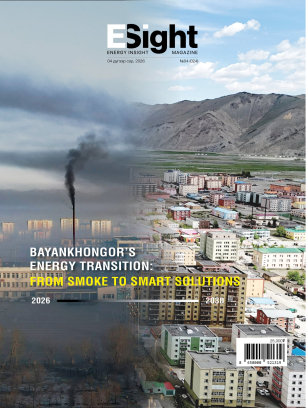


Bayankhongor's energy transition: From smoke to smart solutions
First Energy Planning Hearing to be held in Bayankhongor
Energy Insight is publishing this special issue in connection with the first-ever public hearing on energy planning to be held in Bayankhongor aimag. Facing the dual challenges of energy shortages and air pollution, the province urgently needs to assess its current situation through a multi-stakeholder approach and define sustainable, long-term solutions.
Bayankhongor is one of the most remote endpoints of the central grid. Its fragile electricity supply infrastructure, located at the end of long transmission lines, combined with rising demand, continues to constrain economic development and negatively affect the quality of life for residents.
In response, a public hearing on energy planning will be held in the province, initiated by Governor E. Enkhbat. Such hearings are a form of public consultation conducted during the development of plans related to infrastructure, energy, and urban development. Their purpose is to present proposed policies and decisions by public institutions while gathering input from stakeholders. However, this type of hearing has not previously been practiced in Mongolia, making Bayankhongor the first to implement it.
The hearing will create an open platform where government institutions and officials present policies, plans, and ongoing initiatives, while citizens, businesses, professional organizations, associations, and independent experts can express their views. This will allow issues to be evaluated from multiple perspectives and lay the foundation for more effective and implementable solutions. Beyond serving as a forum for information exchange, the hearing will also function as a mechanism for collecting essential data to inform policymaking.
The public hearing is organized by the Governor’s Office of Bayankhongor aimag and is supported by Energy Insight magazine and the Mongolian Council for Sustainable Development and Social Responsibility within the framework of the United Nations Development Programme’s Participation Project. This initiative aims to strengthen participatory decision-making at the local level by ensuring that citizens’ voices are reflected in policy and that decision-making becomes more transparent and accountable. In practical terms, it means that public input will not only be heard but will also be incorporated into policy documents and planning processes.
Through this special issue, our editorial team provides a comprehensive overview of Bayankhongor’s current energy situation and key challenges, based on diverse sources and data. At the same time, we highlight practical solutions, including renewable energy opportunities, distributed energy systems, and infrastructure modernization. The issue also features perspectives from local leaders and experts to offer readers a broader understanding.
We believe that this information will make a meaningful contribution to identifying pathways for Bayankhongor to transition from an energy consumer to an energy producer, while helping define future directions for policy, investment, and collaboration.
For Bayankhongor, the opportunity to shift from a consumer to a producer of energy is real. The remaining question is who will initiate this transition and when. The answer may begin to take shape on May 1, at the public energy hearing in the center of Bayankhongor.

 2026-04-27


